
Keep all the details in one place.
Choose a notebook or a folder that the people responsible for the property can find. Group records by room or system, and save invoices, product information and any care instructions supplied after work. Record what was done and when. The aim is a practical memory of the property, not an elaborate filing project.
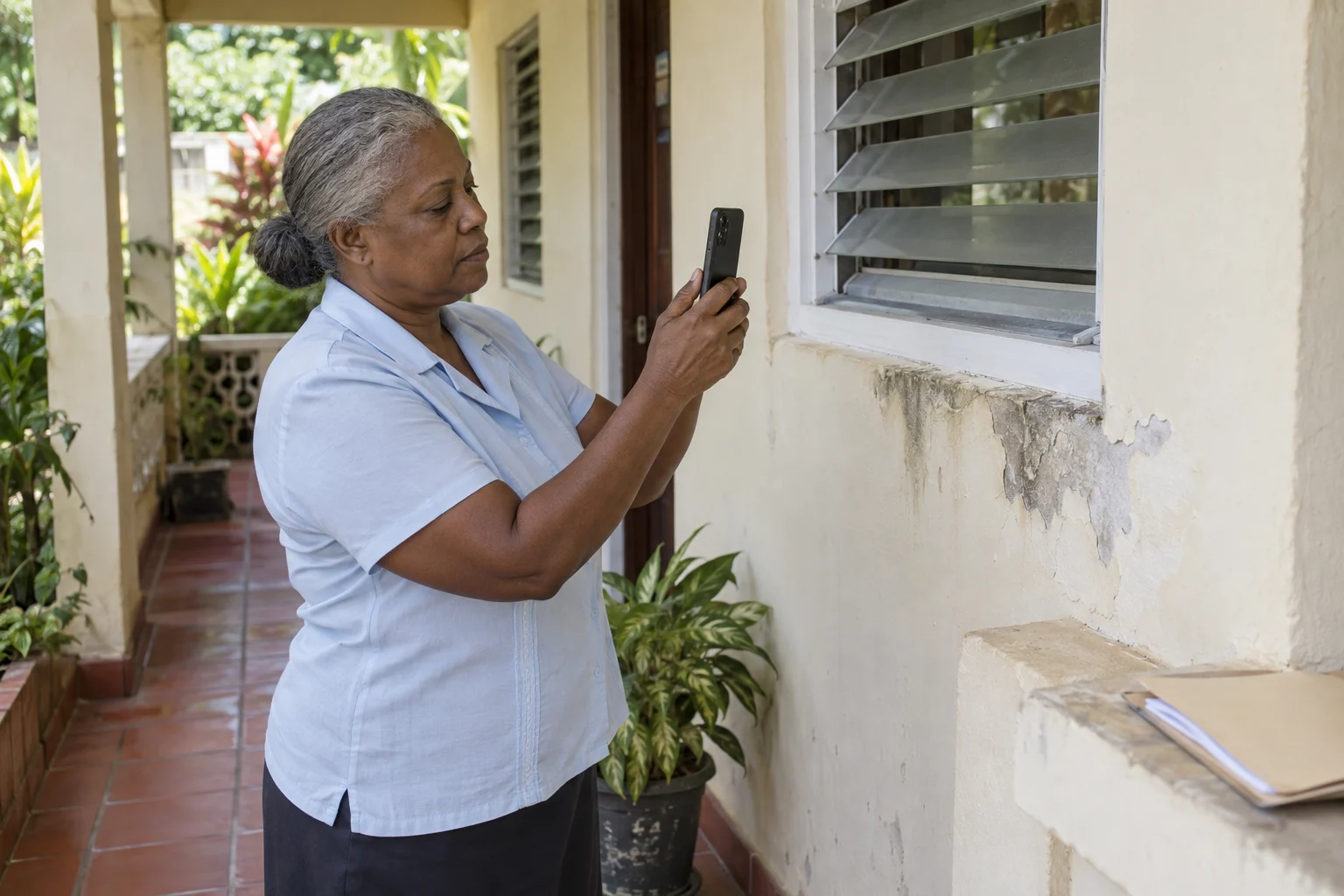
Record what you can safely observe.
A dated note about a sticking door, a recurring stain or a change after heavy rain is more useful than trying to name an unfamiliar fault. Take photographs from a safe, accessible position and describe the location clearly. Do not climb onto roofs, open electrical equipment or enter unsafe areas to complete a record. Ask an appropriate professional to investigate.
Make the next visit more useful.
Before arranging maintenance, gather earlier photographs and the details of previous repairs. Explain whether the issue is new, intermittent or recurring. In a coastal or exposed setting, mention the conditions the property experiences. Let the professional advise on suitable inspection and maintenance intervals rather than applying a generic schedule to every building.
Share access information carefully.
If family members or a property manager help care for a home in Jamaica, agree who updates the record and who receives reports. Keep passwords, access codes and personal information separate from general maintenance notes. After each job, add the agreed care advice and the name of the person to contact with follow-up questions.
Your starting checklist.
- Dated observations with the location of each issue
- Photographs taken safely and records of recurring issues
- Previous repairs, dates and relevant invoices
- Product details and care instructions
- Follow-up contacts, advice and outstanding questions
- One person responsible for keeping the record current
- Passwords and access codes stored separately